Since 1 June 2026, researchers in systematic musicology from Jāzeps Vītols Latvian Academy of Music (JVLMA) and SRH University Heidelberg (Germany) have been implementing the project “ALMA–CETra – Alliance for Learning, Music and Auditive Cognition.” The project is funded by the German Academic Exchange Service (DAAD) within the framework of the HAW.International – Kurzmaßnahmen programme.
The aim of ALMA–CETra is to establish long-term cooperation between SRH University Heidelberg and JVLMA by developing joint educational and research activities in the fields of auditory perception, voice, music therapy and Cognitive Ear Training (CETra). The project brings together approaches from music therapy, systematic musicology, neuroscience, voice research and digital higher education to develop internationally applicable study materials and a joint digital course. The project also serves as a starting point for future collaboration with partners in Taiwan, the United States and Europe, as well as a platform for attracting research funding.
At the end of July, the JVLMA systematic musicology research group – principal researcher Valdis Bernhofs, researcher Jachin Edward Pousson, research assistant Ineta Heinsberga, psychotherapist Aivis Dombrovskis, and JVLMA guest lecturer Artūrs Cingujevs – took part in a five-day international seminar in Heidelberg. The programme included presentations and workshops with master’s students from SRH University Heidelberg’s Music and Movement Therapy programme. Each evening, the team also held meetings to plan future research activities and develop the planned joint digital course together with JVLMA researcher Kristīne Gross (Christine Groß), who is also a professor at SRH University Heidelberg.
The feedback and discussions with the students were highly positive. One of the highlights of the visit was a piano-based music therapy performance by Artūrs Cingujevs. During the performance, both Cingujevs and university student Pouyan Saadat voluntarily agreed to wear EEG electrodes, allowing their inter-brain synchronisation activity to be visualised in real time on a projection screen.
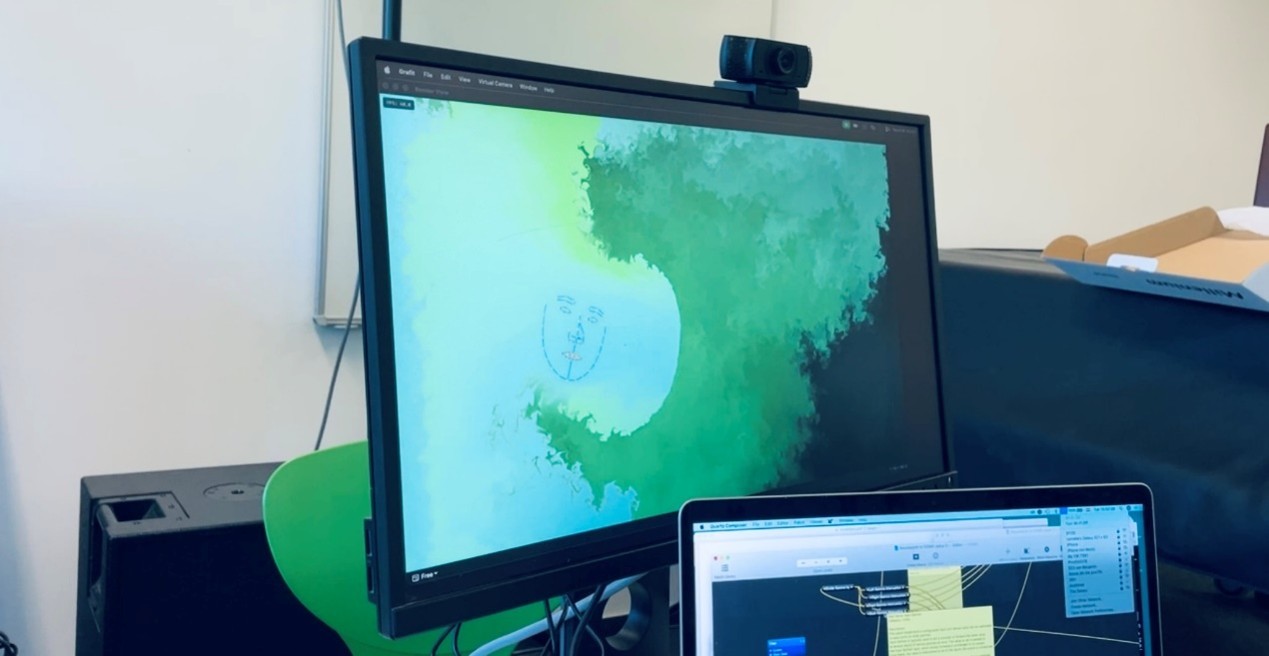
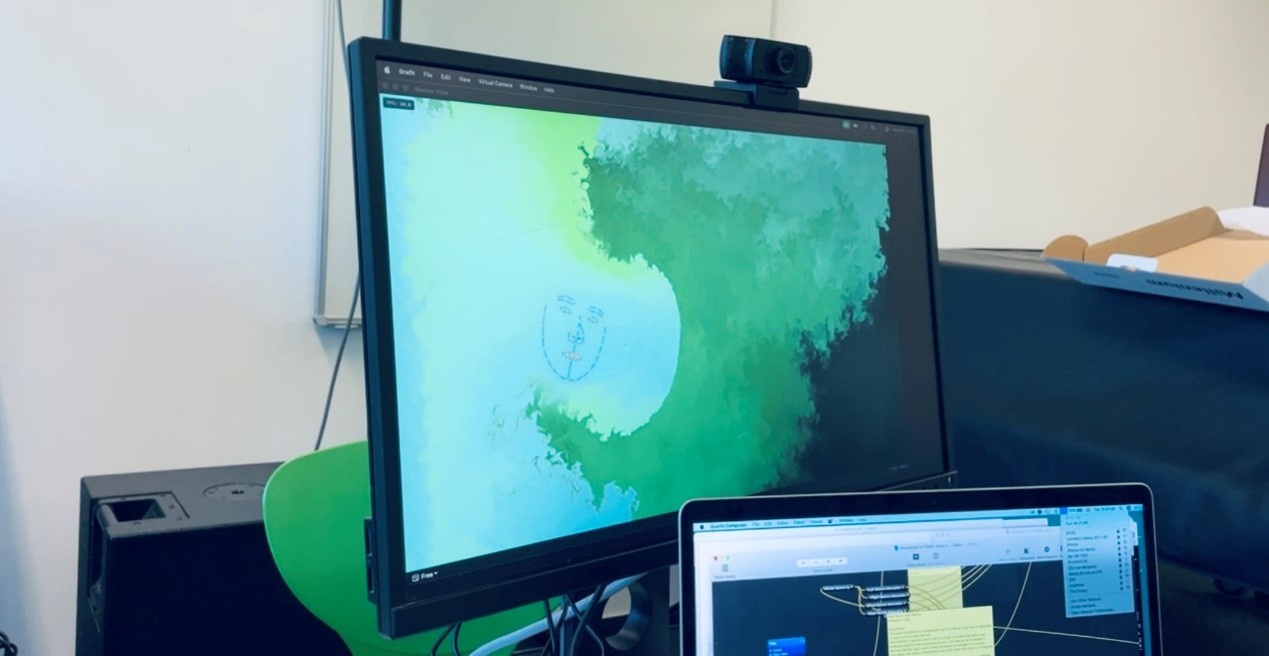
The visualisation generated and dynamically represented changes in clouds, the aurora borealis and stars in response to different measures of inter-brain synchronisation. The visualisation was developed using the specialised GrafitPro
software created by Mārtiņš Dāboliņš, who has provided technical solutions and support for our research activities in Latvia over the past seven years.
The research team is already actively planning the next five-day international ALMA–CETra team seminar, which will take place at JVLMA in September 2026. During the seminar, the modules will be tested in practice, evaluated and further developed together with JVLMA students.
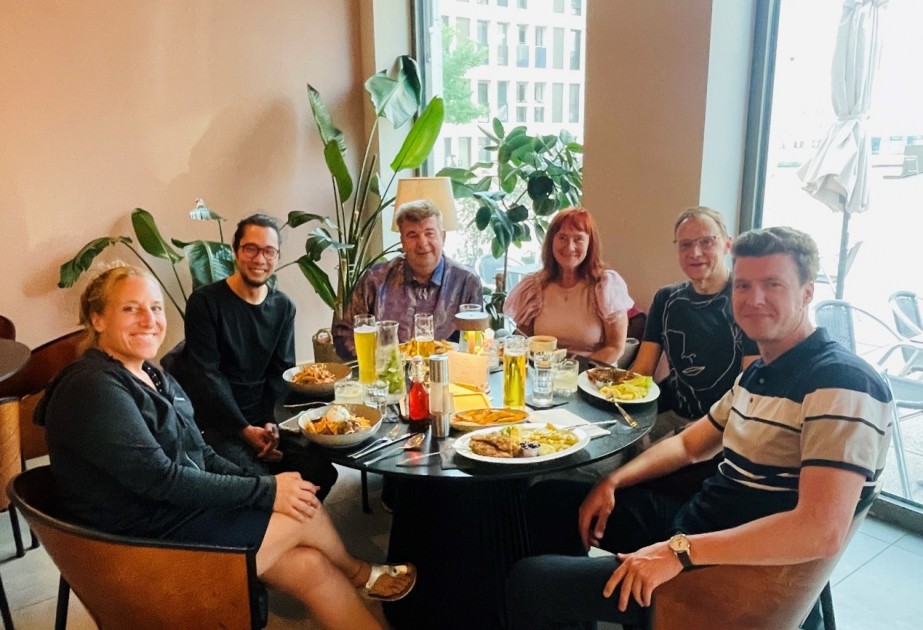
Featured image: ALMA-CETra project group. From the left: Christine Groß, Jachin Edward Pousson, Aivis Dobrovskis, Ineta Heinsberga, Valdis Bernhofs, Artūrs Cingujevs
Second image: Visualisation of brain synchronisation
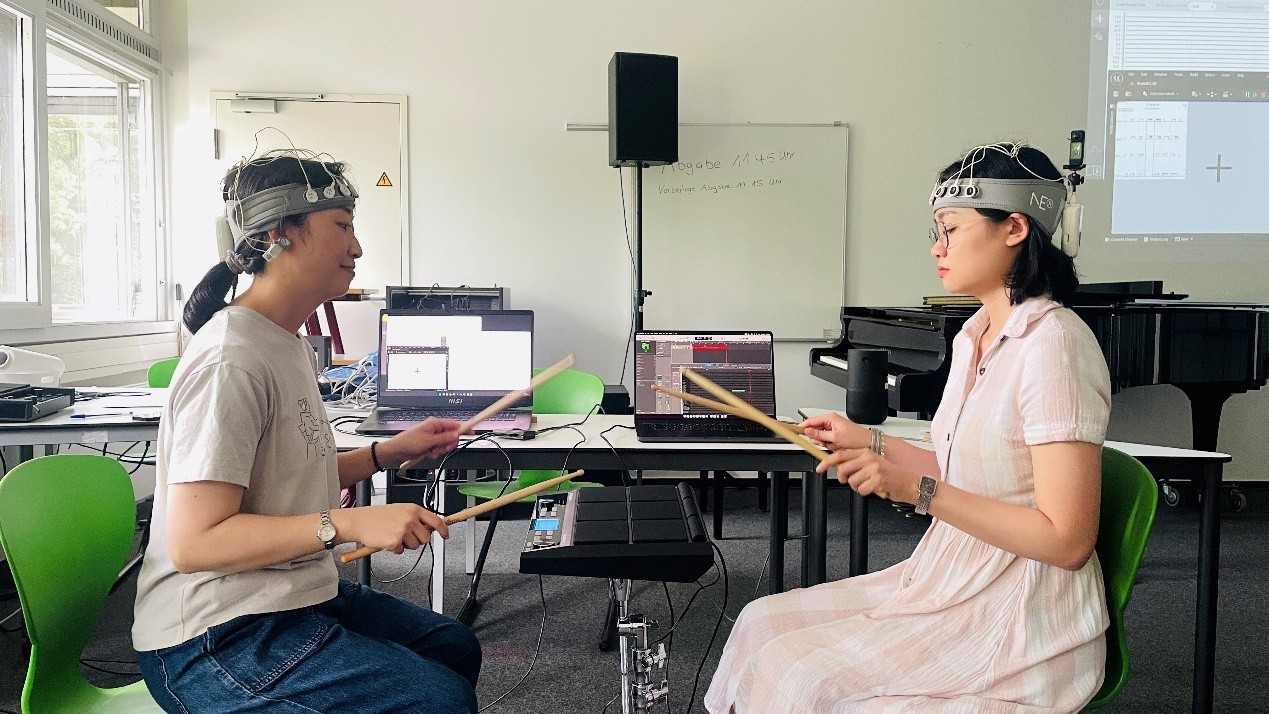
Third image: EEG hyperscanning workshop