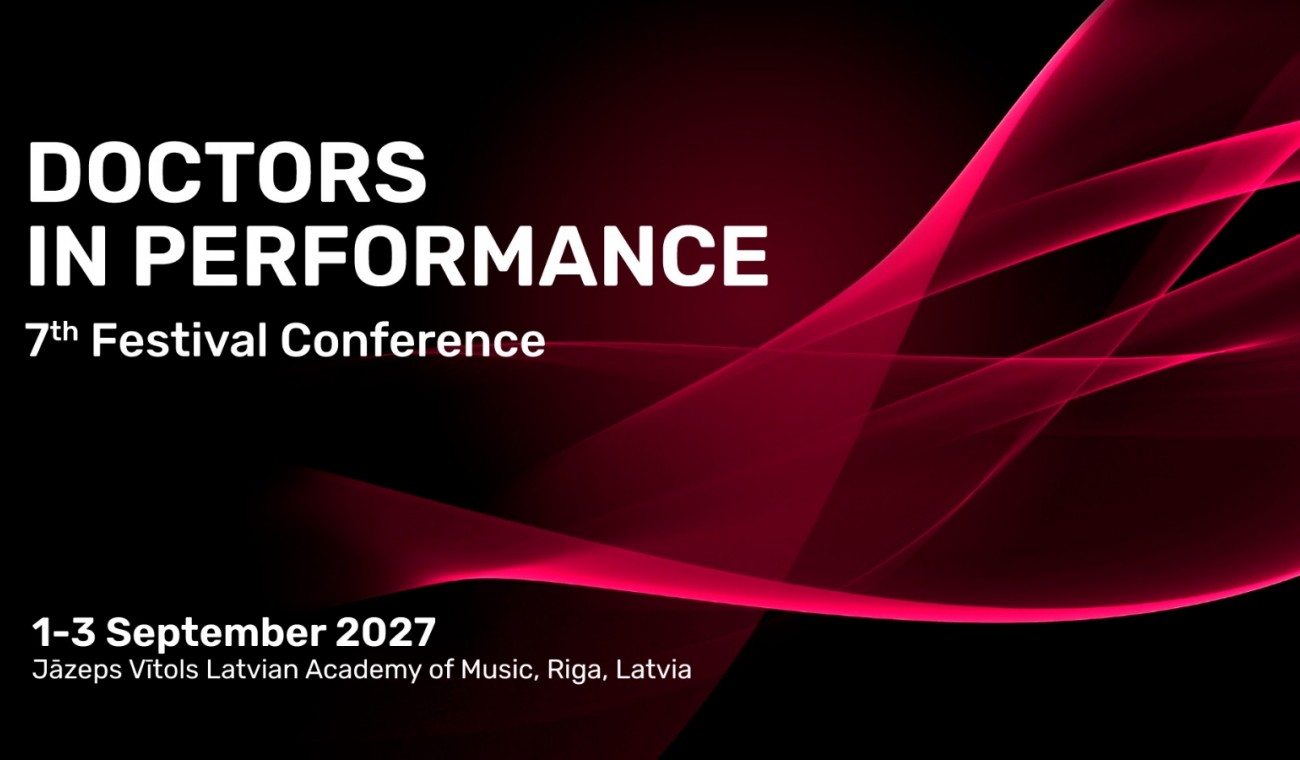
Doctors in Performance Festival Conference, 2027. gada 1.–3. septembris, JVLMA
Jāzepa Vītola Latvijas Mūzikas akadēmija aicina mūzikas jomas profesionāļus, kas studē doktorantūrā vai ir ieguvuši doktora grādu, piedalīties 7. starptautiskajā mūzikas izpildījuma un mākslinieciskās pētniecības festivāla konferencē “Doctors in Performance”.
Konferences mērķauditorija ir doktoranti un pēcdoktorantūras pētnieki, kas strādā mūzikas mākslinieciskās pētniecības jomā.
"Doctors in Performance" festivāla konference (DIP) dibināta 2014. gadā Helsinku Mākslas universitātē. Kopš tā laika to organizējušas sekojošas augstskolas: Īrijas Karaliskā Mūzikas akadēmija (2016, Dublina), Lietuvas Mūzikas un teātra akadēmija (Viļņa, 2018), Igaunijas Mūzikas un teātra akadēmija (Tallina, 2021), Karaliskā mūzikas akadēmija (Londona, 2023) un Helsinku Mākslas universitāte (2025).
“Doctors in Performance” uzsvars tiek likts uz mūzikas atskaņojumu, tādēļ īpaši gaidīti ir koncertlekciju pieteikumi, kā arī referātu prezentācijas par atbilstošām mākslinieciskās pētniecības jomām.
Pieteikšanās: no 2026. gada 1. septembra līdz 2027. gada 28. februārim.
Paziņojums par iekļaušanu konferences programmā: līdz 2027. gada 1. aprīlim
Reģistrācija: no 2027. gada 1. jūnija līdz 16. augustam
Kontakts: dip(abols)jvlma.lv
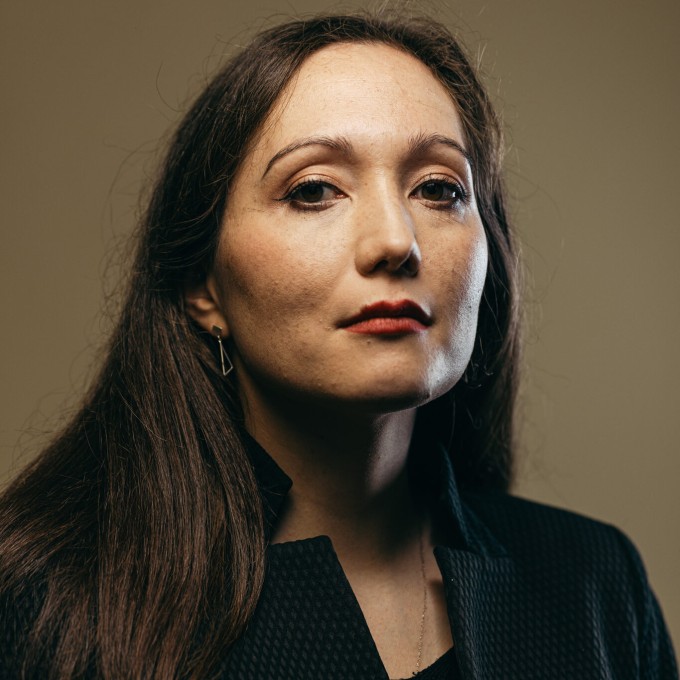
Dr. Arabella Pare (artistic researcher and professor at the Hochschule für Musik Karlsruhe, Germany)
Fragments: Tranhistoricity, Performance, Aesthetics
Fragmentation has become an increasingly prominent condition of musical experience in the twenty-first century. Streaming platforms, curated playlists, algorithmic recommendation systems, and changing patterns of attention have contributed to modes of listening in which musical works are frequently encountered through excerpts, juxtapositions, and discontinuous relationships. This affects not only the musics of the present, but also the ways in which we encounter and interpret the musics of the past. Contemporary practices of listening and curation thus invite a renewed engagement with Romantic fragment aesthetics and their exploration of incompletion, openness, and formal instability.
From its original meaning as an archaeological shard of a previously whole object, fragmentation has been invoked as an aesthetic mode, in which experiences of incompletion and openness are drawn into the construction, performance, and reception of music. Beginning with the philosophy of Romanticism in the long nineteenth century, incompletion is transformed into a formal and material paradigm. This aesthetic of fragmentation offers potential for new musical and artistic experiences, transcending the boundaries of the “closed work” model.
Fragments are therefore not only incomplete or lacking, but offer potential for exploring critical relationships with totality. This lecture-recital explores how fragmentary aesthetics shape the performance and reception of musical works. Through curatorial intersections between compositions by Clara Schumann, Robert Schumann, and Johannes Brahms, it traces lines of canonisation and marginalisation while examining how contemporary modes of listening resonate with earlier aesthetics of incompletion. Rather than treating these works as autonomous masterpieces, the recital presents them as fragments within a larger constellation of historical, aesthetic, and interpretative relationships.
Biography
Arabella Pare is an artist researcher with a background in piano performance and musicology. She specialises in the piano and chamber music of the 18th and 19th Centuries, the aesthetics of musical fragmentation, and research into practices and documents of performance and interpretation. Active internationally as a soloist and chamber musician, Arabella Pare engages with performative modalities for expanding concepts of canon and concert programming.
Beginning with her doctoral dissertation on the fragmentary piano sonatas of Franz Schubert, (published in the series “Schubert : Perspektiven – Studien”) Pare’s musicological activities continue as an author of articles on interpretation, performance practices and historical-cultural analysis and a speaker at conferences relating to music, philosophy, and aesthetics.
Arabella Pare is principal investigator of the research cluster Fragment: Accordances – Enactments at Orpheus Instituut in Gent, Belgium and is professor for artistic research at the Hochschule für Musik Karlsruhe, Germany.
-------------------------------------------------------------------------------------------------------------
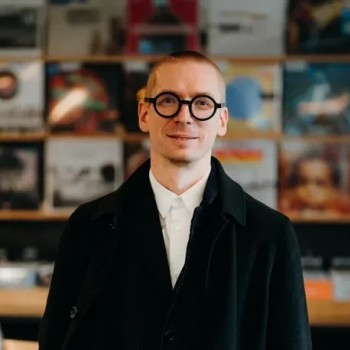
DMA Krists Auznieks (composer, associate professor at the Jāzeps Vītols Latvian Academy of Music)
As Below, So Above: Distillation, Nobility, and the Artist as Alchemist
The lecture-recital proposes composition as a distillatory practice — a procedure of refinement closer in its inner logic to alchemy than to expression. Two case studies frame the argument, both drawn from the speaker's recent operatic work. Rosa Alchemica (after Yeats; premiered on the main stage of the Latvian National Opera in May 2027) literalises the alchemical procedure: a rose burns at the threshold, two women — Carmine and Scarlet — undertake the long work of transmutation, and a single rose blooms in an empty room as the opera closes. As Below, So Above (opening the Riga Wagner Theatre in 2028) takes the Hermetic axiom for both title and method: its libretto is drawn entirely from the surviving words of Richard, Minna, and Cosima Wagner — letters, diaries, prose — with no invented dialogue. What is researched, in each case, is what a composer's labour does to historical and symbolic matter when that labour is prolonged, attentive, and deliberately oriented upward.
The frame is older than either opera. Diotima's ladder, in Plato's Symposium, describes an ascent from the particular to the universal: from the love of one beautiful body to the love of Beauty itself, by way of souls, institutions, and knowledges. Alchemy, in its hermetic register, names the same movement in another vocabulary — nigredo, albedo, rubedo, gold. Both traditions take for granted that what is base may be refined, and that refinement is the artist's proper office. The lecture proposes that this older grammar still describes what happens in a composer's studio with more accuracy than the languages of self-expression and information that the twentieth century left us. A third thread runs through both case studies and both traditions: nobility of spirit. A century of irony has made the word difficult, but the practice it names — an aspiration to elevation that is neither naive nor nostalgic — is, the lecture argues, available again, and useful. Distillation is the procedure; gold, or the rose, is the telos; nobility is the disposition that holds the procedure to its task. The lecture-recital will move between scores, fragments of libretto and source text, and recorded excerpts from both operas, and will reflect on what artistic research stands to gain from naming the older work it has, in fact, never stopped doing.
Keywords: alchemy; distillation; opera; composition as artistic research; nobility of spirit; Hermeticism; Plato's Symposium
Biography
Krists Auznieks (b. 1992, Riga) is a Latvian composer working at the intersection of music, text, and stage. He composes with the conviction that beauty carries moral weight — that a precisely imagined sonic world can alter the room it enters — and his work is animated by a sustained engagement with literature, philosophy, and the contemplative traditions. His music has been described as "exhilarating, stunning, luminous" (San Francisco Classical Voice) and praised for its "extraordinarily imaginative writing" (BBC Radio 3); his quintet Piano was named by The New York Times among the week's best classical music moments. In 2021 he was named Person of the Year in Latvian Culture.
Opera and music theatre have been at the centre of his recent practice. NeoArctic, a climate performance opera created with Hotel Pro Forma, the Latvian Radio Choir, Icelandic writer Sjón, and electronic artist Andy Stott, received the Danish Reumert Award and has toured to the Royal Danish Theatre, the Kennedy Center, the Southbank Centre, and the Baltic Sea Festival. Phaedra in vlammen, scored for the New European Ensemble and directed by Ola Mafaalani, premiered at Het Nationale Theater in The Hague. Other stage works include Drive Your Plow Over the Bones of the Dead (Dailes Theatre, Riga). Two new operas are forthcoming: Rosa Alchemica, premiering on the main stage of the Latvian National Opera in May 2027, and As Below, So Above, opening the inaugural season of the Riga Wagner Theatre in 2028.
His concert music has been commissioned and performed by the Atlanta Symphony Orchestra, American Composers Orchestra, Bang on a Can, Swedish Radio, Kremerata Baltica, Cappella Amsterdam, the Latvian Radio Choir, and Sinfonietta Rīga, and has been heard at Carnegie Hall, Walt Disney Concert Hall, the Kennedy Center, and the Muziekgebouw. His debut double album Coiled Horizon (SKANI, 2022) was nominated for three Opus Klassik awards.
Among his distinctions are the Latvian Grand Music Award — of which he remains the youngest-ever recipient — the International Rostrum of Composers Prize, the Reumert Award, the Jacob Druckman Prize, and the Richard Wagner Scholarship from Bayreuth. He has held fellowships at Civitella Ranieri, the Hermitage Artist Retreat, and the Cité internationale des arts in Paris. Auznieks holds a DMA from the Yale School of Music, where he studied with David
Lang, Martin Bresnick, Aaron Jay Kernis, and Christopher Theofanidis, and a BA from the Royal Conservatory of The Hague (Peter Adriaansz, Guus Janssen). He is Associate Professor and Head of the Composition Department at the Jāzeps Vītols Latvian Academy of Music in Riga, recently served as Chair of the Latvian Composers' Union (2024–2026) and as Artistic Director of Baltic Music Days 2026, and is published by Donemus.
Doctors in Performance Festival Conference
Riga, Latvia, 1-3 September 2027
Jāzeps Vītols Latvian Academy of Music invites music performers at the doctoral and post-doctoral level to take part in ‘Doctors in Performance’, the seventh festival conference of music performance and artistic research.
The purpose of the conference is to bring together doctoral candidates and post-doctoral researchers working in the field of artistic research in music performance.
The Doctors in Performance Festival Conference (DIP) was established in 2014 at the University of the Arts Helsinki. Since then, it has been organized by the following institutions: The Royal Irish Academy of Music (2016, Dublin), The Lithuanian Academy of Music and Theatre (Vilnius, 2018), The Estonian Academy of Music and Theatre (Tallinn, 2021), The Royal Academy of Music (London, 2023) and The University of the Arts Helsinki (2025).
‘Doctors in Performance’ places emphasis on the performance itself, and we particularly encourage recital and lecture recital submissions, although paper presentations in relevant fields of artistic research are also welcome.
Keynote speakers
We are eagerly awaiting the presentations of our two keynotes – professor for artistic research Dr. Arabella Pare (Hochschule für Musik Karlsruhe, Germany) and associate professor in composition, DMA Krists Auznieks (Jāzeps Vītols Latvian Academy of Music).
Conference schedule
7 x 4 parallel sessions of 90 minutes (three recital halls 30+30 minutes and one auditorium 20+20+20 minutes, including 5-10 minutes of discussion).
Proposals
Presentations may be proposed in one of three formats:
- a short recital with research introduction
- a lecture recital
- a research paper (including captured performance footage if appropriate)
Timings for the presentations are as follows, each followed by a 10-minute discussion:
- Recital + introduction: 30 minutes (including 5-10 minutes of research introduction and set-up)
- Lecture recital: 30 minutes (including set-up)
- Paper presentation: 20 minutes
Performance spaces will contain a grand piano, music stands and an A/V system with a screen and PA. We may be able to provide additional equipment on request, such as a mixing desk, stereo speakers and microphones.
We also have a range of historical keyboard instruments available. For more details, please email Paula Auzāne at dip(abols)jvlma.lv
The conference language is English, and all presentations should be in English.
Proposals should be filled out on the provided link below and include the following:
- name and title of the presenter/s
- institutional affiliation
- type of presentation (recital, lecture recital or paper)
- title and abstract of the presentation (300 words maximum), including details of any works to be performed
- For recital and lecture-recital proposals, please include a link to recent video footage of you performing live (at least 5 mins);
- equipment needed for the presentation (instruments, technical requirements etc)
- biography (100 words maximum) and contact information
- photo
Please submit your proposal here
Practical information
Call is open from September 1st 2026
Deadline for submissions: February 28th 2027
Notification of acceptance: by April 1st 2027
Registration is open from June 1st until August 16th 2027
Register for DIP2027 by paying the Registration Fee. The fee must be paid at the same time as you complete your registration, it cannot be paid later. All registration fees include the daily coffees and participation in all sessions: keynotes and all presentations, and the Conference reception.
Registration fees:
150€ Presenter and participant (including the Conference reception on September 1st and coffee).
220€ Presenter and participant (including the Conference reception, coffee and dinner on September 2nd).
100€ Student presenter and student (a valid student ID is required; the fee includes the Conference reception and coffee).
170€ Student presenter and student (a valid student ID is required; the fee includes the Conference reception, coffee, and dinner).
There will be no possibility to join online! The estimated number of participants will be around 80–100 people.
Steering Committee
- Prof. Lina Navickaite, Chair (Lithuanian Academy of Music and Theatre)
- DMus Assi Karttunen (University of Arts Helsinki)
- Dr. Sarah Callis (Royal Academy of Music)
- Prof. Denise Neary (Royal Irish Academy of Music)
- Dr. Theodore Parker (Estonian Academy of Music and Theatre)
Organization Committee (Jāzeps Vītols Latvian Academy of Music)
- Dr. Diāna Zandberga
- Dr. Anda Beitāne
- Solvita Zvidriņa
- Sigita Razminoviča
- Paula Prauliņa
- Paula Auzāne
Local arrangements
The conference will take place at the Jāzeps Vītols Latvian Academy of Music at Krišjāņa Barona iela 1 in central Riga.
The Riga International Airport is serviced by a number of airlines. The Riga city centre is a 20-minute bus or taxi ride from Riga International Airport. Bus No. 22 (frequency every 10 to 30 minutes) provides direct service between the airport and the city centre. At the airport, look for the bus stop located opposite the main entrance/exit from the terminal, behind the car park P1.
Additional information
If you have any further questions, please do not hesitate to reach out to the organising committee by email dip(abols)jvlma.lv
Looking forward to seeing you in Riga
(Download here)